Chinstrap Penguins:
Habitat, Diet, Lifespan, and Facts
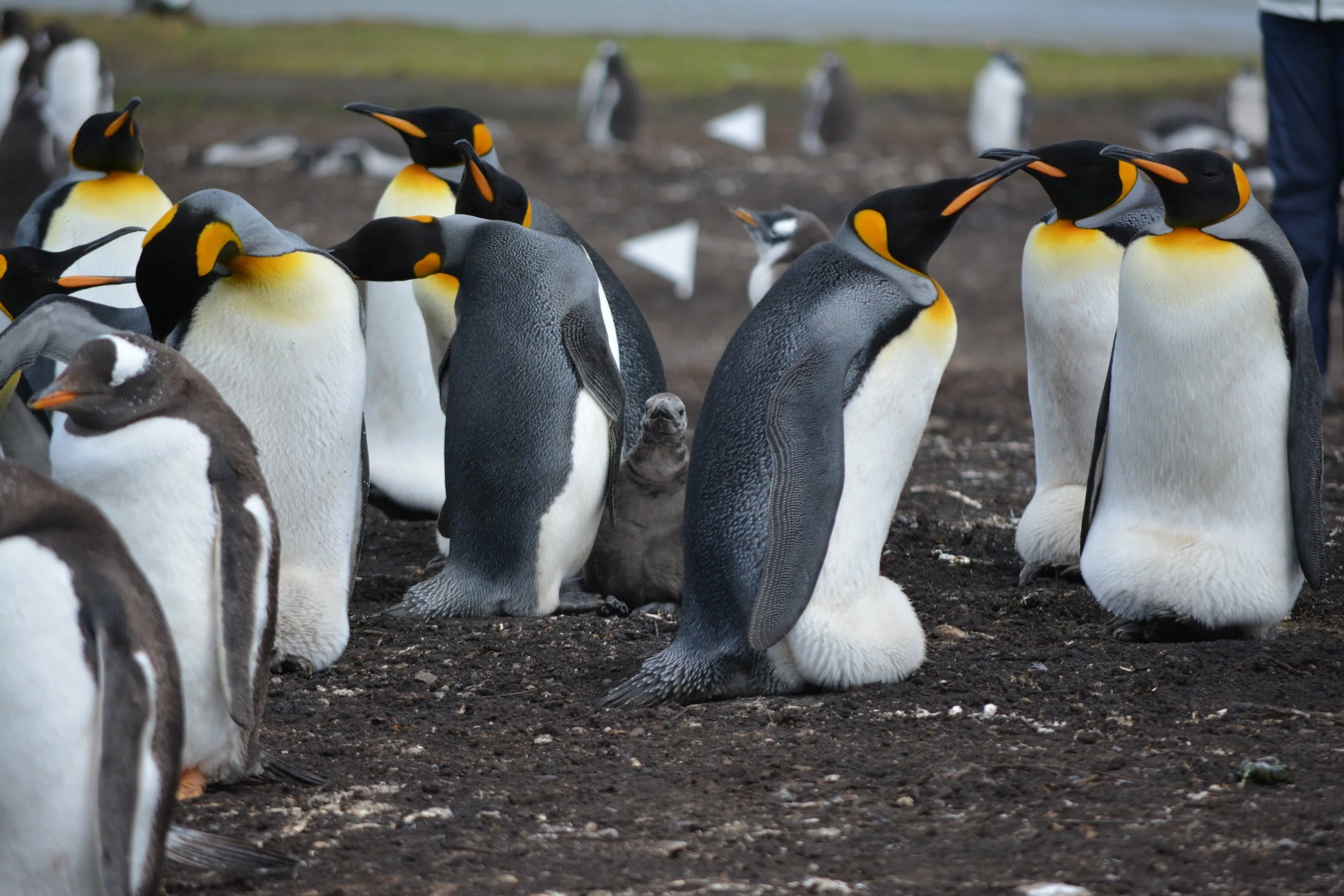
The chinstrap penguin (Pygoscelis antarcticus) is a medium-sized penguin species native to the Antarctic Peninsula and subantarctic islands of the Southern Ocean. It feeds primarily on Antarctic krill and small fish.
Quick Facts About the Chinstrap Penguin
Scientific name: Pygoscelis antarcticus
Height: 68–77 cm (27–30 in)
Weight: 3.2–5.3 kg (7–12 lb)
Lifespan: 15–20 years in the wild
Habitat: Antarctic Peninsula, South Sandwich Islands, South Shetland Islands, South Orkney Islands
Diet: Antarctic krill, small fish, squid
Conservation status (IUCN): Least Concern
What Is the Chinstrap Penguin's Natural Habitat?
Chinstrap penguins breed primarily on the Antarctic Peninsula and a series of subantarctic island groups, including the South Sandwich Islands, South Shetland Islands, South Orkney Islands, and Bouvet Island. Some colonies are also found on the South Georgia and Balleny Islands. Breeding colonies are typically located on rocky, ice-free slopes and cliff faces, often at considerable elevation above sea level. The species ranges roughly between 55°S and 70°S latitude.
Unlike the Adélie penguin (Pygoscelis adeliae), which distributes broadly around the entire Antarctic coastline, chinstrap penguins are concentrated more heavily along the Antarctic Peninsula and the island arc of the Scotia Sea. This geographic overlap means the two species frequently compete for nesting sites and prey in shared regions.
Outside the breeding season, chinstrap penguins disperse northward across the open waters of the Southern Ocean, following the pack ice edge. They are highly pelagic during the non-breeding months and return to established colony sites each austral spring with strong site fidelity.
What Is the Chinstrap Penguin's Diet?
Chinstrap penguins are pursuit divers that feed almost exclusively on Antarctic krill (Euphausia superba) in most parts of their range. Small fish and squid are taken in smaller quantities and vary by location and season. The species' heavy reliance on a single prey type makes it particularly sensitive to fluctuations in krill availability.
Chinstrap penguins are shallow to mid-depth foragers. Most dives are recorded between 20 and 70 m (66–230 ft), with maximum recorded depths around 179 m (587 ft). Foraging trips during chick-rearing are typically short, often lasting less than a day, as colonies are situated close to productive krill-rich waters. Unlike the king penguin (Aptenodytes patagonicus), which undertakes extended foraging trips lasting weeks and targets deep-water fish, chinstrap penguins make frequent short trips to shallow, krill-dense feeding grounds.
What Is the Chinstrap Penguin's Lifespan?
Chinstrap penguins live approximately 15 to 20 years in the wild. As with most penguin species, first-year mortality is the highest, as juvenile birds must develop foraging skills while navigating marine predator pressure without parental support.
Sexual maturity is reached at around 3–4 years of age, with most individuals beginning to breed at 4–5 years old. Chinstrap penguins are monogamous and typically reunite with the same partner each breeding season, though pair bonds can break down after a failed breeding attempt or if one partner arrives at the colony significantly later than the other.
Egg-laying occurs in November, with two eggs laid per clutch, a distinguishing trait shared with other Pygoscelis penguins, like the gentoo penguin. Both eggs are typically incubated, and both chicks are raised when food availability permits. Chicks fledge in February or March, completing the breeding cycle within approximately three to four months.
Does the Chinstrap Penguin Have Any Natural Predators?
At sea, chinstrap penguins are preyed upon by leopard seals (Hydrurga leptonyx) and orca (Orcinus orca). Leopard seals are the more consistent predator, targeting penguins at the water's edge near colony landing sites. Orca predation occurs in open water and is less frequently documented for chinstrap penguins than for larger species.
On land, south polar skuas (Stercorarius maccormicki) and brown skuas (Stercorarius antarcticus) prey on unguarded eggs and small chicks. Giant petrels (Macronectes spp.) also opportunistically target chicks, particularly at the edges of large colonies. Adult chinstrap penguins are aggressively territorial and will defend nest sites actively, which provides some deterrent against avian predators.
The chinstrap penguin is listed as Least Concern on the IUCN Red List, but several major colonies have recorded significant population declines over recent decades. Some colonies on Elephant Island and the South Sandwich Islands have shown reductions of over 50 percent since surveys conducted in the 1970s and 1980s, though survey methodology differences complicate direct comparisons. The leading hypothesis for these declines centers on reduced krill availability linked to the loss of sea ice and increased competition from recovering whale and seal populations. Unlike the gentoo penguin (Pygoscelis papua), whose populations have expanded in several parts of the Antarctic Peninsula in recent decades, chinstrap penguin numbers have trended downward across much of their range.
Frequently Asked Questions About Chinstrap Penguins
What Is the Chinstrap Penguin's Scientific Name?
The chinstrap penguin's scientific name is Pygoscelis antarcticus. It belongs to the brush-tailed penguin genus Pygoscelis, alongside the Adélie penguin and the gentoo penguin. The species name antarcticus reflects its primary association with the Antarctic region.
What Is the Height of a Chinstrap Penguin?
Chinstrap penguins stand between 68 and 77 cm (27–30 in) tall. They are slightly taller and more slender in build than the Adélie penguin, though the two species overlap considerably in size. The chinstrap is readily distinguished from both its Pygoscelis relatives by the thin black line of feathers running beneath the chin, which gives the species its common name.
What Is a Chinstrap Penguin Fun Fact?
Chinstrap penguins are among the most abundant penguin species on Earth, with global population estimates ranging from approximately 4 to 8 million breeding pairs, though recent surveys suggest the true current figure may be lower. They are also notably loud; colonies can be heard from considerable distances due to the frequency and intensity of vocalizations used for partner and chick recognition. Individual calls are acoustically distinct, allowing mates and offspring to locate each other within densely packed colonies of thousands of birds.