Adélie Penguins:
Habitat, Diet and Lifespan
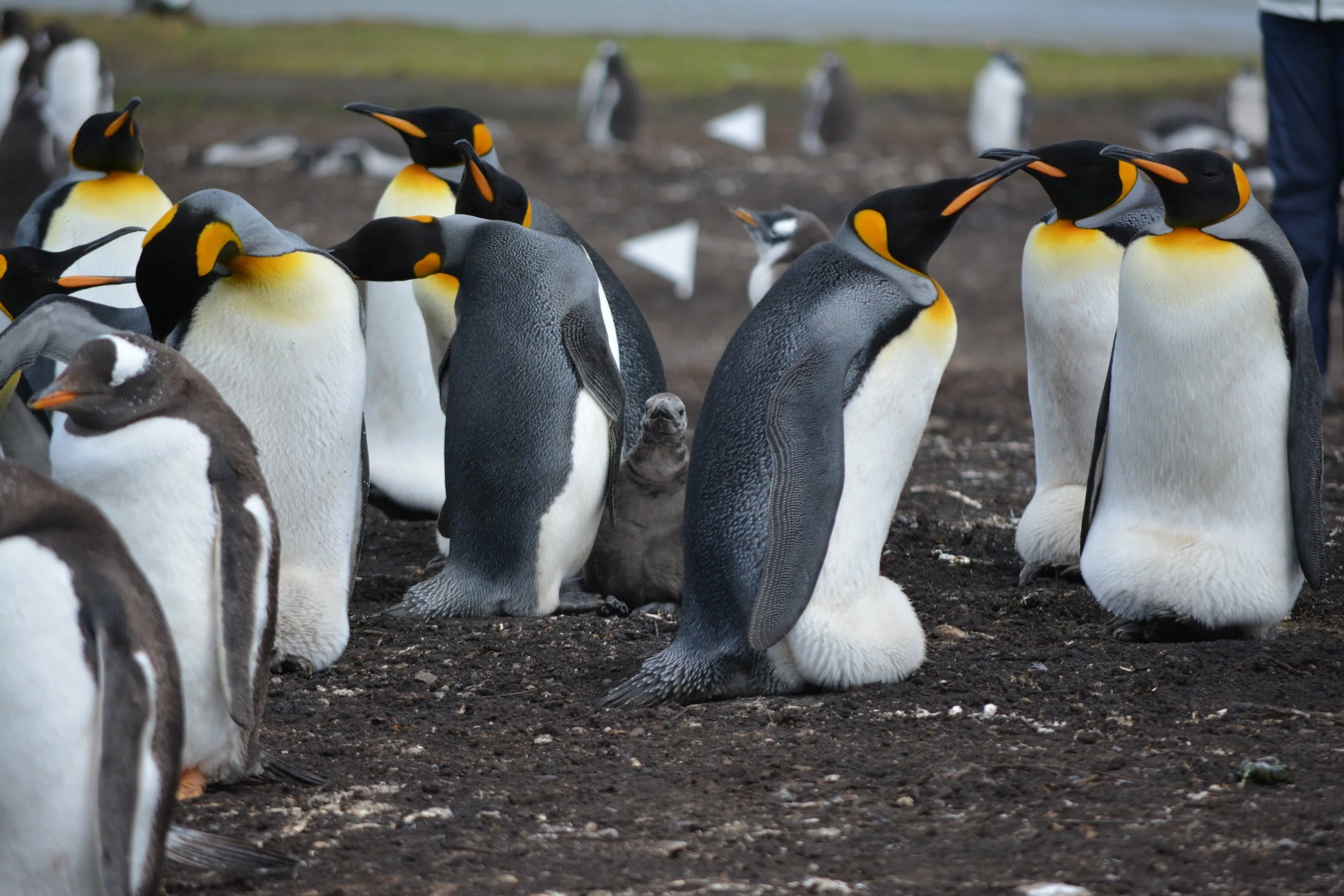
The Adélie penguin (Pygoscelis adeliae) is a medium-sized penguin species found along the Antarctic coastline and surrounding islands. It feeds primarily on Antarctic krill, ice krill, and small fish.
Quick Facts About the Adélie Penguin
Scientific name: Pygoscelis adeliae
Height: 46–71 cm (18–28 in)
Weight: 3.6–6 kg (8–13 lb)
Lifespan: 10–20 years in the wild
Habitat: Antarctic continent, Antarctic Peninsula, subantarctic islands
Diet: Antarctic krill, ice krill, squid, small fish
Conservation status (IUCN): Least Concern
What Is the Adélie Penguin's Natural Habitat?
Adélie penguins are distributed along the entire coastline of Antarctica and on several surrounding island groups, including the South Sandwich Islands, South Orkney Islands, and South Shetland Islands. They breed on ice-free rocky shores, typically at latitudes ranging from approximately 60°S to 77°S. The species is one of only two penguin species that breeds exclusively south of the Antarctic Circle during the peak of the breeding season, the other being the emperor penguin (Aptenodytes forsteri).
Unlike the king penguin (Aptenodytes patagonicus), which inhabits milder subantarctic islands year-round, Adélie penguins are highly seasonal in their movements. Outside the breeding season, they migrate north to forage along the edge of the pack ice, tracking the seasonal advance and retreat of sea ice across the Southern Ocean.
Adélie penguins construct shallow, cup-shaped nests from small stones gathered near the colony. Nest site fidelity is strong; individuals typically return to the same colony and often the same nest site each breeding season.
What Is the Adélie Penguin's Diet?
Adélie penguins are pursuit divers that feed predominantly in ice-associated and open-water environments near their colonies. Their diet is dominated by Antarctic krill (Euphausia superba) and ice krill (Euphausia crystallorophias), supplemented by small fish such as Antarctic silverfish and squid where available. Diet composition shifts depending on geographic location and season.
Adélie penguins are relatively shallow divers compared to larger penguin species. Most foraging dives occur at depths of 10–70 m (33–230 ft), though dives exceeding 170 m (560 ft) have been recorded. Unlike the emperor penguin (Aptenodytes forsteri), which regularly exceeds 400 m (1,310 ft) in pursuit of deep-water fish, Adélie penguins concentrate their foraging effort in the shallower, krill-rich waters of the upper ocean and sea ice zone.
What Is the Adélie Penguin's Lifespan?
Adélie penguins live between 10 and 20 years in the wild, with most individuals surviving into their mid-teens under favorable conditions. Survival rates in early life are lower, as first-year birds must learn to forage independently and navigate predator-rich waters.
Sexual maturity is reached at approximately 3–4 years of age, though most individuals do not breed successfully until their fourth or fifth year. Adélie penguins are monogamous within a breeding season and show strong partner fidelity across multiple seasons, though pair bonds are not always maintained if one partner fails to return to the colony on time.
The breeding season is tightly compressed to coincide with the brief Antarctic summer. Egg-laying occurs in October or November, and chicks fledge by February, giving the entire cycle a duration of approximately three to four months. This compressed schedule contrasts sharply with the 14–16 month cycle of the king penguin.
Does the Adélie Penguin Have Any Natural Predators?
At sea, Adélie penguins are preyed upon by leopard seals (Hydrurga leptonyx) and orca (Orcinus orca). Leopard seals are the primary marine predator, and they station themselves near colony entry and exit points to ambush penguins transiting between land and water. Predation pressure from leopard seals is highest during the chick-rearing period when adults make frequent foraging trips.
On land, south polar skuas (Stercorarius maccormicki) are the principal predator of Adélie penguin eggs and small chicks. Skuas patrol colony edges and target unguarded or weakly defended nests. Giant petrels (Macronectes spp.) also take chicks opportunistically. Adult Adélie penguins on land are not significantly threatened by avian predators.
The Adélie penguin is currently listed as Least Concern on the IUCN Red List, with a global population estimated at approximately 10 million individuals. However, regional population trends are uneven. Colonies along the western Antarctic Peninsula have declined in areas where winter sea ice has diminished, reducing the krill populations that Adélie penguins depend on. In contrast, colonies in East Antarctica and the Ross Sea region have remained stable or increased. Unlike the African penguin (Spheniscus demersus), which faces acute threats from oil spills and overfishing near its breeding range, the primary long-term threat to Adélie penguins is the restructuring of Southern Ocean ecosystems driven by climate change.
Frequently Asked Questions About Adélie Penguins
What Is the Adélie Penguin's Scientific Name?
The Adélie penguin's scientific name is Pygoscelis adeliae. It belongs to the genus Pygoscelis, commonly called the brush-tailed penguins, which also includes the chinstrap and gentoo penguins. The species name adeliae honors Adélie Land in Antarctica, itself named after Adèle Dumont d'Urville, the wife of French explorer Jules Dumont d'Urville.
What Is the Height of an Adélie Penguin?
Adélie penguins stand between 46 and 71 cm (18–28 in) tall. They are considerably smaller than the emperor penguin, which can reach 120 cm (47 in), and are among the more compact members of the Pygoscelis genus. Males and females are similar in size, though males are marginally heavier on average.
What Is an Adélie Penguin Fun Fact?
Adélie penguins are one of the most studied penguin species in the world, having been observed by researchers in Antarctica for over a century. They are known to steal pebbles from neighboring nests to supplement their own, a behavior documented as early as the expeditions of George Murray Levick in 1911–1912. Pebbles serve a functional role in nest construction, elevating eggs above meltwater during the breeding season.